Alumina grinding balls are made from materials such as bauxite, roller powder, industrial alumina powder, and high-temperature calcined alpha alumina powder through processes including batching, grinding, powdering (slurry preparation, mud preparation), molding, drying, and firing. They are widely used as grinding media. Based on different alumina contents, they can be divided into medium-alumina balls, medium-high alumina balls, and high-alumina balls.
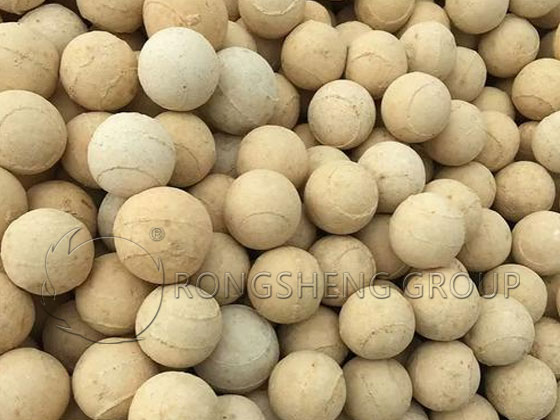
Generally, balls with 60%-65% alumina content are classified as medium-alumina balls, those with 75%-80% alumina content as medium-high alumina balls, and those with over 90% alumina content as high-alumina balls. High-alumina balls are further subdivided into 90%, 92%, 95%, and 99% ceramic. 99% ceramic balls are rarely mass-produced by large manufacturers due to their extremely high production cost; currently, they are mainly produced by hand by some specialty ceramic factories.
Medium-alumina balls and medium-high alumina balls are accepted by most ceramic factories due to their lower price and are mainly used for grinding ceramic blanks. High-alumina balls are widely used in the precision and deep processing of thick and hard materials in various factories such as ceramics, porcelain enamel, glass, and chemicals due to their excellent properties such as high strength, high hardness, high wear resistance, high specific gravity, small size, high temperature resistance, corrosion resistance, and no pollution. Among them, high-alumina balls with a content of 92% are the most commonly used.
Features of Alumina Grinding Balls
- ① High-alumina grinding balls have low wear, significantly extending the service life of the grinding media. Corundum grinding media have high hardness, reaching Mohs hardness of 8 or higher.
- ② Alumina balls possess high strength and impact resistance. Their compressive strength exceeds 1500 MPa, making them widely applicable in vibratory mills where high impact force and low wear are required.
- ③ High-alumina grinding balls can withstand temperatures exceeding 1000 degrees Celsius and are resistant to acids, alkalis, and corrosion. They meet the needs of the petroleum and chemical industries.
- ④ High-alumina grinding balls are formed using rolling and isostatic pressing, resulting in a high specific gravity, which significantly improves grinding efficiency and reduces grinding time. Simultaneously, it effectively increases the effective volume of the ball mill, thereby increasing the amount of material that can be fed into the mill.
Applications of Alumina Grinding Balls
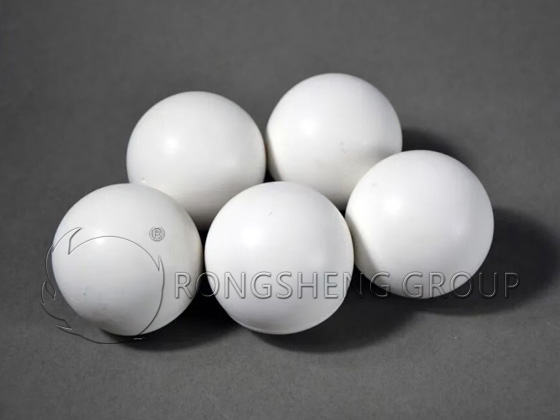
Due to their high alumina content, high density, high hardness, and high wear resistance, alumina grinding balls are widely used in various types of ceramics, building and sanitary ceramics, industrial ceramics, electronic ceramics, porcelain enamels, glass, as well as high-grade refractory materials, special cements, deep processing of non-metallic minerals, and mechanical polishing. They are also used as grinding media in major oil refineries, fertilizer plants, petrochemical plants, urea plants, nitrogen fertilizer plants, dye plants, and the pharmaceutical and coating industries.
Wear Resistance of Alumina Grinding Balls
To enhance the wear resistance of alumina grinding balls, consider the following three points:
- The particle size of the Al2O3 raw material directly affects the wear resistance of the alumina grinding balls. Smaller Al2O3 particles result in plastic deformation and partial transgranular fracture, leading to slight wear. Larger Al2O3 particles significantly increase transgranular fracture, resulting in more severe wear. Therefore, based on these two points, smaller Al2O3 grains result in better wear resistance for the alumina grinding balls.
- Sintering aids lower the sintering temperature of the alumina grinding balls, improving the ceramic microstructure and mechanical properties, ultimately enhancing their wear resistance.
- Molding process: Roll forming and isostatic pressing techniques overcome the hollow, layered, and uneven defects of other molding methods. The size and shape of the raw material, as mentioned above, also affect roll forming and isostatic pressing. Therefore, it is essential to use suitable raw materials and mature forming technology to ensure good sintering characteristics and improve the wear resistance of alumina grinding balls.
Plate Alumina Balls are Sintered Alumina Balls
Plate-shaped alumina balls are sintered alumina balls. Alumina balls are formed into spherical shapes from high-quality alumina powder using a rolling ball-forming device. Sintered balls are then obtained by sintering the initial alumina balls at a temperature of 1950°C. The crystals are organized in a grid-like pattern, thereby increasing the mechanical strength of the particles. Plate-shaped alumina is characterized by highly developed hexagonal plate-like α-alumina crystals, reaching lengths of up to 200 μm. Through the sintering process, the final plate-shaped alumina balls achieve a higher gravitational density and a denser crystalline structure.
What industries use high-purity alumina balls?
What are high-purity alumina balls? First, they are balls used for grinding, mixing, and pressing. Material: Alumina. Purity: Up to 99.99%.
Product Properties. The grinding balls have a uniform texture, composed of fine polycrystalline materials, and possess excellent mechanical properties and wear resistance.
Alumina ceramics have a wide range of applications, and many wear-resistant parts are made of alumina. However, compared to newer ceramic materials such as Si3N4 (silicon nitride), SiC (silicon carbide), and ZrO2 (zirconia), their mechanical properties are relatively weaker.
Rongsheng’s series of high-purity alumina materials maximizes the performance of alumina, utilizing state-of-the-art ceramic material technology to combine extremely fine polycrystalline materials into 99.9% high-purity ceramics. This significantly improves the material’s wear resistance and corrosion resistance. Main application industries are as follows:
- Crushing and dispersing of precision ceramic powders
- Crushing and dispersing of electronic component materials
- Crushing and dispersing of inks, pigments, and coatings
- Crushing and dispersing of papermaking materials
- Crushing and dispersing of glass and abrasives
- Crushing of raw materials for ceramics and sanitary ware
- Crushing of ores such as alumina ore, zircon ore, and quartz ore
- Crushing of refractory materials, abrasives, and white cement
- Raw material preparation for electronic components
- Glass, glaze materials, pigments, and finely ground powders
- Papermaking materials
- Various filling materials and catalysts