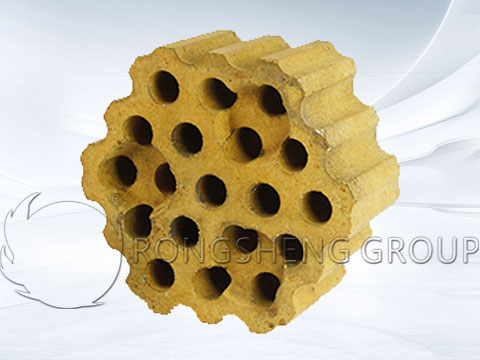
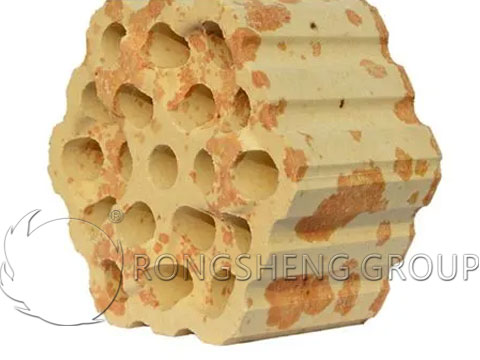
The regenerator chamber serves as the primary component for heat exchange within a hot blast stove; it is constructed from checker bricks. The characteristics of these checker bricks directly influence the stove’s heat storage capacity, heat exchange efficiency, and overall thermal efficiency. Commonly used types of checker bricks include plate-type bricks and perforated block-type bricks. Currently, five-hole and seven-hole checker bricks are widely adopted in hot blast stoves for blast furnaces.
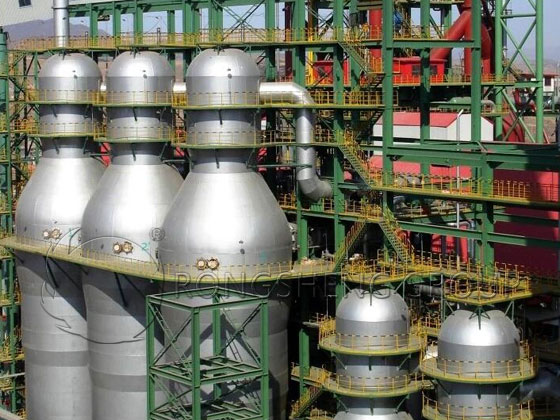
Structure and Function of the Regenerator
The structure of a regenerator can be broadly classified into two types: the single-stage type, in which the cross-section of the checkerwork channels remains constant throughout the entire height; and the multi-stage type, in which the cross-section of the channels varies. From the perspective of heat transfer and heat storage, the multi-stage design is considered the more rational choice.
During the operation of a hot blast stove, it is desirable for the upper, high-temperature section of the regenerator to store a greater quantity of heat. Consequently, the checker bricks in the upper section should be relatively large in volume while presenting a comparatively smaller surface area exposed to the hot gas flow. This configuration ensures that the bricks do not cool down too rapidly during the blast cycle, thereby preventing a precipitous drop in the temperature of the blast air.
In the lower section of the regenerator, where temperatures and airflow velocities are lower, the effectiveness of convective heat transfer is diminished. Therefore, measures must be taken to enhance the heat exchange capacity of the checker bricks in this region. An effective approach involves the use of wave-shaped checker bricks or checkerwork channels with varying cross-sections; this strategy serves to increase the degree of turbulence within the airflow, thereby improving convective heat transfer performance in the lower section.
Fundamentally, the regenerator is a massive heat-storage body constructed from stacked checker bricks, fulfilling the core function of “storing heat during the combustion phase and releasing heat during the blast phase.” It directly determines the hot blast stove’s heat storage capacity, heat exchange efficiency, blast air temperature stability, and service life; as such, it constitutes a critical component enabling blast furnaces to achieve high-temperature, low-energy-consumption smelting operations.
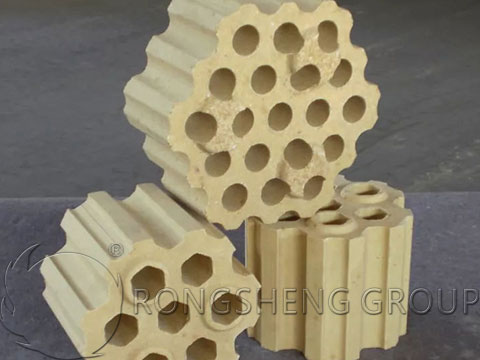
Checker Brick Material Selection and Physical Properties
As a core component within hot blast stoves, the heat exchange and heat storage functions of checker bricks directly impact the thermal efficiency and blast temperature of the stove. Checker bricks are typically manufactured from materials possessing high thermal conductivity and thermal stability—such as silica, clay, or high-alumina refractory materials. These materials ensure the stability and durability of the checker bricks within high-temperature environments.
Silica Checker Bricks: Silica-based materials boast a refractoriness exceeding 1710°C and exhibit excellent thermal stability and thermal shock resistance, making them suitable for high-temperature operating conditions. Their SiO2 content is no less than 95%, while the Al2O3 and Fe2O3 contents do not exceed 1% and 1.5%, respectively; this composition ensures the purity and performance of the material.
Clay Checker Bricks: Clay-based checker bricks are renowned for their high bulk density and low apparent porosity. Typically, they feature a bulk density greater than 1.9 g/cm³ and an apparent porosity lower than 23%, characteristics that help enhance heat exchange efficiency and minimize heat loss.
High-Alumina Checker Bricks: High-alumina checker bricks contain a high proportion of Al2O3—typically exceeding 48%. This composition endows the material with superior resistance to chemical corrosion and greater high-temperature strength, rendering it suitable for use in the most demanding hot blast stove environments.
In terms of physical properties, the thermal conductivity, heat capacity, and thermal stability of checker bricks are critical indicators. High thermal conductivity facilitates improved heat exchange efficiency, while high heat capacity enables the checker bricks to store a greater quantity of thermal energy. In modern blast furnace hot blast stoves, the thermal conductivity of checker bricks typically falls within the range of 1.5 to 2.5 W/(m·K), while their heat capacity varies depending on the specific material composition.
Structural Design of Checker Bricks
The structural design of checker bricks exerts a significant influence on their heat exchange efficiency and heat storage capacity. Checker bricks are typically designed with a matrix of open, interconnected flues (or channels); these flues not only increase the surface area available for contact with the flue gas but also facilitate smoother airflow and minimize flow resistance.
Flue Design: The design of the flues within the checker bricks must carefully balance the requirements for heat exchange efficiency against those for structural stability. The selection of the appropriate flue diameter (or aperture size) has a profound impact on the overall performance of the checker bricks. For instance, compared to a checker brick with a 30 mm aperture, a brick with a 20 mm aperture increases the heating surface area per unit volume from 48 m²/m³ to 64 m²/m³, thereby significantly enhancing heat exchange efficiency. As a specific example: a 5,500 m³ blast furnace utilized 19-hole checker bricks featuring thin walls and small apertures; these bricks possessed a pore diameter of 30 mm and achieved a specific surface area of 48.7 m²/m³. This design increased the heat storage surface area by 26% compared to traditional seven-hole checker bricks, effectively boosting the hot blast stove’s thermal efficiency and blast temperature.
Positioning Protrusions and Grooves: To ensure the orderly arrangement and structural stability of the checker bricks within the regenerator chamber, the brick design incorporates positioning protrusions and corresponding grooves. This feature helps maintain the precise alignment of the bricks during the hot blast stove’s operation, thereby minimizing misalignment and blockages caused by thermal expansion.
Dimensions and Shape of Checker Bricks: The dimensions and shape of checker bricks also exert an influence on their heat exchange performance. For example, cylindrical and cross-shaped checker bricks—owing to their unique geometric designs—offer a larger heating surface area and superior heat exchange efficiency compared to traditional rectangular bricks.
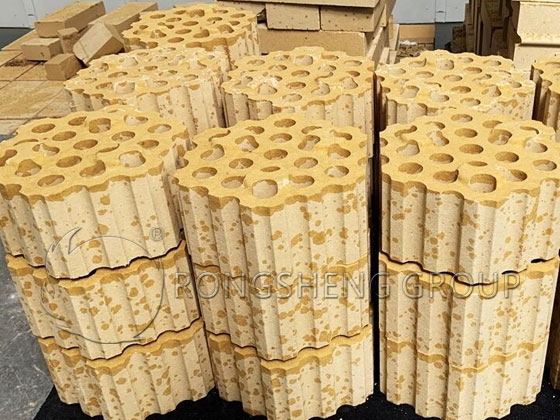
Dense High-Thermal-Conductivity Silica Checker Bricks
Dense high-thermal-conductivity silica checker bricks serve as an ideal high-temperature functional material for hot blast stoves. Silica refractory materials are utilized in critical high-temperature zones of hot blast stoves due to their exceptional structural strength and volume stability at elevated temperatures; their performance in application depends primarily on their degree of density and mineral phase composition. The lower the porosity, the denser the material, resulting in higher thermal conductivity and greater mechanical strength. Furthermore, within the mineral phase composition, a higher content of tridymite correlates with superior thermal conductivity, enhanced volume stability, and greater structural strength at high temperatures.
In the regenerator chambers of hot blast stoves, the bulk density and thermal conductivity of silica checker bricks are directly proportional to their heat storage and heat transfer efficiencies. Dense, high-thermal-conductivity silica checker bricks can effectively shorten the stove heating and blast cycles; they constitute a pivotal material for achieving low-carbon operation, energy conservation, high efficiency, and extended service life in the critical high-temperature zones of hot blast stove regenerators.
These bricks are manufactured using crystalline silica as the primary raw material, supplemented by appropriate quantities of low-expansion additives, nano-scale binders, plasticizers, mineralizers, and sintering aids. Utilizing a precisely engineered particle size distribution, the material undergoes high-pressure molding followed by sintering at 1460°C. This process has resulted in the development of dense, high-thermal-conductivity silica checker bricks that demonstrate performance characteristics significantly superior to those of standard silica checker bricks.
Visual inspections—including external appearance, cross-sectional views, and Scanning Electron Microscopy (SEM) images—clearly demonstrate the structural advantages of the dense, high-thermal-conductivity silica checker bricks compared to their standard counterparts: they exhibit superior density, smaller pore diameters, and significantly lower porosity.
An analysis of the physicochemical performance metrics for both standard and dense, high-thermal-conductivity silica checker bricks reveals that the latter significantly outperforms the former across key parameters, including thermal conductivity, apparent porosity, cold crushing strength, and tridymite content. Consequently, dense, high-thermal-conductivity silica checker bricks are poised to become the ideal high-temperature functional material for hot blast stoves, offering the potential to substantially enhance both energy conversion efficiency and operational service life.