Focus on Producing Quality Unshaped Refractory and Fire Bricks !
Aluminosilicate Ceramic Fiber Boards for Energy-Saving Insulation of Kilns and Pipelines
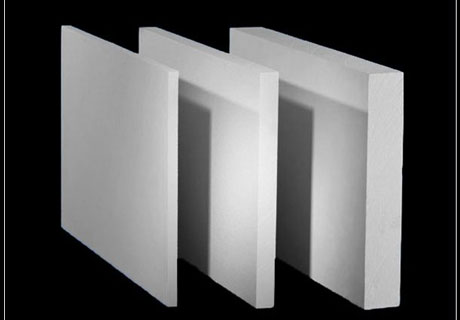
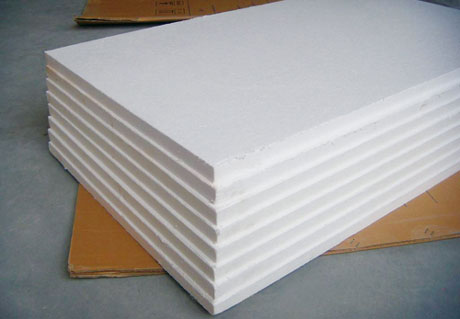
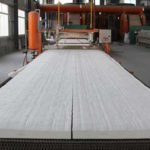
Alumina silicate ceramic fiberboard, with its non-expanding properties upon heating, lightweight nature, and ease of installation, is an ideal energy-saving material for insulation equipment such as kilns and pipelines! In modern industry, the selection of insulation materials is crucial for improving equipment efficiency and reducing energy consumption. Alumina silicate ceramic fiberboard, with its excellent characteristics of non-expanding upon heating, lightweight nature, and ease of installation, has become an ideal energy-saving material for insulation equipment such as kilns and pipelines. Today, let’s take a closer look at this high-performance insulation material.
Alumina silicate ceramic fiberboard, a leading inorganic refractory material, plays a crucial role in industrial applications due to its multiple properties, including flame retardancy, fire resistance, thermal insulation, and sound insulation. As a widely used refractory and thermal insulation material in high-temperature environments ranging from 600°C to 1200°C, alumina silicate ceramic fiberboard exhibits superior performance and stability.
Alumina silicate ceramic fiberboard, also known as alumina silicate fiberboard or refractory fiberboard, is manufactured using continuous production methods and advanced automated production lines, ensuring reliable and consistent product quality. This advanced manufacturing process results in a more uniform and dense fiber arrangement in the microstructure of the alumina silicate ceramic fiberboard, further enhancing its fire resistance and thermal insulation properties.
In high-temperature environments, alumina silicate ceramic fiberboard effectively blocks heat transfer, maintaining stable internal temperatures. Simultaneously, its excellent thermal insulation properties reduce energy loss and improve energy efficiency. In addition, aluminosilicate ceramic fiber boards also have excellent sound insulation properties, reducing noise pollution and bringing a quiet and comfortable working environment.
Aluminosilicate ceramic fiber boards have a wide range of applications, not only for thermal insulation of high-temperature equipment such as kilns and heat treatment furnaces, but also for fire protection of pipes, furnace walls, and other components. Their superior performance and reliability make aluminosilicate ceramic fiber boards an indispensable, highly efficient, energy-saving, and environmentally friendly insulation material in the industrial field.
Basic Characteristics of Alumina Silicate Ceramic Fiber Board
Alumina silicate ceramic fiber board is a fibrous insulation material made from aluminum silicate through a special process. It has the following significant characteristics:
No expansion upon heating: Alumina silicate ceramic fiber board maintains a stable shape under high temperatures, without significant expansion or deformation, ensuring long-lasting insulation performance.
Lightweight: This fiber board has low density and is lightweight, facilitating handling and installation, reducing the overall load on equipment, and improving operating efficiency.
Convenient construction: Alumina silicate ceramic fiber board can be cut and spliced according to actual needs, making construction simple and quick, greatly shortening the construction period.
High compressive strength and long service life.
Low heat capacity and low thermal conductivity.
Non-brittle material with good toughness.
Precise dimensions and good flatness.
Excellent wind erosion resistance.
Continuous production, uniform fiber distribution, and stable performance.
Applications of Alumina Silicate Ceramic Fiber Boards in Kiln and Pipeline Insulation
Kiln Insulation: Alumina silicate ceramic fiber boards can be used for insulation of the inner walls and doors of kilns. Their excellent insulation performance effectively reduces heat loss, improves kiln thermal efficiency, and lowers energy consumption.
Pipeline Insulation: For pipelines transporting high-temperature media, alumina silicate ceramic fiber boards provide reliable insulation, preventing rapid heat loss and ensuring safe and stable pipeline operation.
Energy Saving Effect of Alumina Silicate Ceramic Fiber Boards
With their excellent insulation performance, alumina silicate ceramic fiber boards significantly reduce the energy consumption of kilns, pipelines, and other equipment. Long-term use not only saves enterprises substantial energy costs but also contributes to energy conservation and emission reduction, promoting green production.
As a high-performance insulation material, alumina silicate ceramic fiber boards play a crucial role in the insulation of kilns, pipelines, and other equipment. Their non-expanding under heat, lightweight, and easy-to-install characteristics make them an ideal energy-saving material. With the continuous development of the industrial sector, the application prospects of aluminosilicate ceramic fiberboard will be even broader.
What materials should be used for the insulation layer when the kiln outer skin temperature requirement is 50℃?
When the kiln outer skin temperature requirement is 50℃, lightweight insulating castable or fiberboard can be used as the insulation layer.
The kiln skin temperature requirement of 50℃ is relatively low. If fiberboard is chosen, ordinary aluminum silicate fiberboard is not sufficient; nano-board must be used for the insulation layer. Furthermore, it cannot be too thin; a minimum thickness of 100mm is required. However, whether the 50℃ outer skin temperature will be achieved is uncertain. It should be acceptable in the low winter temperatures. In summer, with sunlight and ambient temperature, the temperature will exceed 50℃, which is influenced by weather conditions. However, using a 150mm thick insulation board should not pose a significant problem.
Using lightweight insulating castable will reduce costs somewhat. However, the thickness cannot be too thin; generally, a thickness of 300mm is sufficient to achieve the required outer skin temperature. Excessive thickness of the lightweight insulating castable will affect the kiln diameter. Because a 300mm thick insulation layer requires 600mm of diameter space on both sides of the kiln, the kiln diameter is reduced. However, from an insulation perspective alone, a 300mm thick lightweight insulating castable can achieve the required kiln outer surface temperature.
If the kiln height is too high, it’s unlikely that refractory bricks will be used for the insulation or working layer. This is because there might be joints in the middle, and the working layer is most likely to use heavy castable. Using nano-boards or lightweight castable for the working layer is feasible. Nano-boards have a plastic outer layer, preventing moisture from entering; even if some moisture is discharged from the castable, the insulation layer will not be affected. If lightweight insulating castable is used and heavy castable is used for the working layer, both are castable, and there are no moisture discharge issues affecting the insulation layer’s performance.
Therefore, when the required external kiln surface temperature is low, both nano-boards and lightweight insulating castable are acceptable, but there are certain thickness requirements. Nano-plates should ideally be at least 100mm thick, while lightweight castables require a thickness of 300mm to meet certain performance requirements.
The specific methods for reducing the outer wall temperature of a kiln vary depending on its actual operating conditions. Rongsheng Refractory Materials Manufacturer can customize energy-saving and heat-insulating furnace linings for your high-temperature industrial furnace based on its actual operating conditions. Contact us for a free solution.