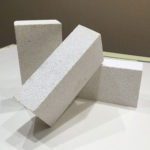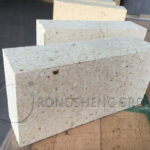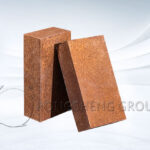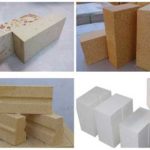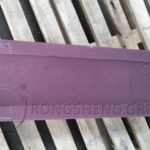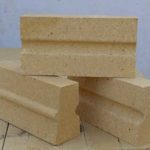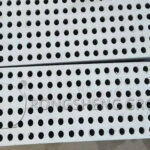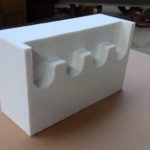
Chrome corundum bricks refer to corundum refractory products containing Cr2O3. At high temperatures, Cr2O3 forms a continuous solid solution with Al2O3, thus giving chrome corundum products superior high-temperature performance compared to pure corundum products. Chrome corundum bricks used in petrochemical gasifiers should be low in silicon, iron, and alkali, with high purity, as well as high density and strength. Most commonly used chrome corundum products have a Cr2O3 content in the range of 9% to 15%. The main mineral composition is an α-Al2O3-Cr2O3 solid solution. The minor mineral composition includes a small amount of composite spinel (or no composite spinel), and the chromium oxide content is 1% to 30%. There are two types: cast chrome corundum bricks and sintered chrome corundum bricks. Generally, chrome corundum bricks refer to sintered chrome corundum bricks.

Advantages and Characteristics of Chrome Corundum Bricks
Chrome corundum bricks are widely used due to their unique composition and performance. What are their advantages?
- High Temperature Resistance: Chrome corundum bricks have excellent thermal stability, making them suitable for use in high-temperature environments. They can withstand temperatures up to 1800°C, making them ideal for applications in industries such as steel, cement, glass, and non-ferrous metals.
- Chemical Resistance: Chrome corundum bricks have strong resistance to chemical corrosion, especially to alkalis, slag, and molten metals. This corrosion resistance allows them to maintain structural integrity and performance in harsh chemical environments, making them suitable for furnaces and kilns containing corrosive materials.
- Abrasion Resistance: Chrome corundum bricks have excellent abrasion resistance, making them durable. They can withstand the erosion of abrasives, ensuring extended service life even in highly abrasive environments such as cement kilns or steel ladles.
- Slag Erosion Resistance: Chrome corundum bricks are almost not eroded by molten slag. The boundary between the inner pore edge and the slag is clear, and slag penetration into the brick is minimal. Chrome corundum refractory bricks exhibit better resistance to chemical erosion and permeation by gasifying slag than corundum refractory bricks.
- High Mechanical Strength: These bricks possess high compressive strength and structural integrity, enabling them to withstand mechanical stress and loads. They resist thermal shock, maintaining their shape and strength even when exposed to rapid temperature changes.
- Compressive Strength: Chrome corundum bricks have a room temperature compressive strength greater than 150 MPa, while corundum refractory bricks have a compressive strength of 70-100 MPa, significantly higher than corundum bricks. During the firing process, Al₂O₃-Cr₂O₃ solid solutions are formed between particles, between particles and fine powder, and between fine powder particles in both corundum and chrome corundum bricks. These solid solutions bind the particles and fine powder together, greatly improving the strength of the refractory bricks.
- Low Porosity: Chrome corundum bricks have low porosity, which helps reduce thermal conductivity and prevent heat loss. This characteristic contributes to improved energy efficiency and insulation performance in high-temperature applications.
- Good Thermal Conductivity: Although chrome corundum bricks have low porosity, they still exhibit excellent thermal conductivity. This characteristic facilitates efficient heat transfer and distribution within the kiln, ensuring uniform temperature distribution and improved process control.
- Easy Installation: Due to their standard shapes and sizes, chrome corundum bricks are relatively easy to install. They can be easily cut or shaped to fit specific applications. This simplifies the installation process and reduces downtime during maintenance or repairs.
These are the advantages of chrome corundum bricks. With their high-temperature resistance, chemical resistance, wear resistance, and mechanical strength, chrome corundum bricks are widely used in critical parts of high-temperature kilns across various industries. They are used to withstand complex working environments and ensure the stability of high-temperature kilns during operation.
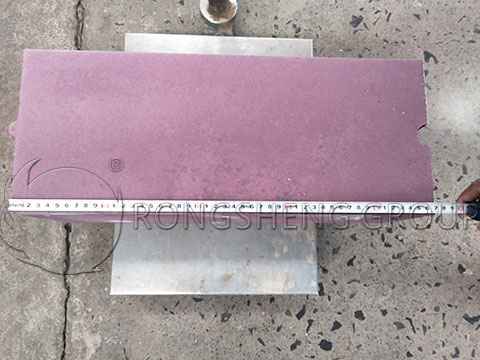
How to Better Select Micronized and Ultrafine Powders in the Production of Chromium Corundum Bricks?
Chromium corundum series products are a new type of refractory material developed in the last decade or so. Due to their high compressive strength, flexural strength, and resistance to acid, alkali, and chemical corrosion from metal oxides, they are widely used in building materials industries such as glass kiln regenerators and walls, lead-zinc non-ferrous smelting, petrochemicals, and waste incinerators. In recent years, based on chromium corundum bricks, chromium corundum mullite bricks and chromium zirconium corundum bricks have been derived, forming a complete product series. The raw materials used in chromium corundum series products are a solid solution synthesized by high-temperature melting of alumina and chromium oxide in a specific ratio. Manufactured using special refractory material production processes, they can significantly improve and enhance the internal quality of the products, especially their high-temperature performance.
Micronized and ultrafine powders are indispensable in the production process of chromium corundum bricks. How to select micronized and ultrafine powders and use them rationally is a technical issue that must be considered in the process design and production of chromium corundum products. In addition, chromium corundum bricks undergo high-temperature sintering, solid-state sintering, or liquid-phase sintering processes, involving stages such as particle rearrangement, grain boundary diffusion, and pore removal, ultimately forming a densified sintered body.
Sintering of Chromium Corundum Bricks
During sintering, the contact area between particles gradually increases, grain boundaries gradually form and expand, accompanied by the migration of lattice defects, precipitation of impurities, and removal of pores, ultimately achieving material densification. This process is characterized by high temperature, long duration, and multi-factor coupling. Among these, changes in grain boundary fluidity directly affect the evolution of the material’s microstructure and final properties. The formation and evolution of grain boundary structure is one of the core research contents of the sintering process. The essence of grain boundary fluidity is the ability of grain boundaries to migrate and recombine under thermodynamic driving force or external field. The microscopic mechanism of this process involves grain boundary diffusion, surface energy gradient driving, and the migration behavior of atoms/molecules at grain boundaries, directly affecting the densification path and final microstructural characteristics of the sintered body. During sintering, grain boundary fluidity promotes grain rearrangement and fusion, accelerates pore migration and elimination, and thus significantly improves the density and uniformity of the material.
In the solid-state sintering stage, particles rearrange themselves through a surface energy-driven diffusion mechanism. The atomic diffusion rate at grain boundaries is significantly higher than in the intragranular region, causing the grain boundaries to gradually thicken and form a continuous network. With increasing sintering temperature, the grain boundary diffusion rate accelerates, and grain boundary fluidity increases, thereby promoting grain growth and densification. During the firing process, Al₂O₃-Cr₂O₃ solid solutions are formed between particles, between particles and fine powders, and between fine powders. These solid solutions act as bridges, connecting particles and fine powders together and greatly improving the material’s strength.
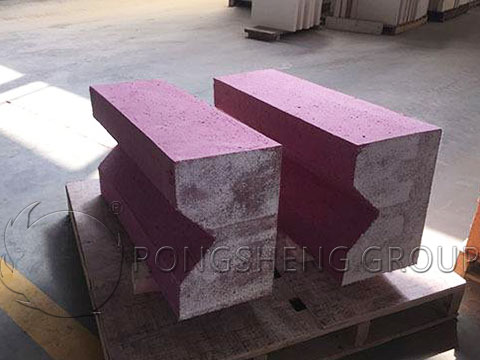
Addition of Chromium Corundum Brick Micropowder Raw Material
(1) When chromium oxide green is added at 15%, with the gradual increase of α-Al₂O₃ ultrafine powder, the bulk density and room temperature compressive strength of the sample first show a gradual increase, and then a gradual decrease, while the apparent porosity shows the opposite trend. The best physical properties are achieved when the amount of alumina ultrafine powder added is 4%. This is because excessive ultrafine powder is not conducive to the densification of the brick body, and internal delamination occurs. Therefore, the amount of alumina ultrafine powder added should be controlled at 3-5%.
(2) When the alumina ultrafine powder is fixed at 4%, with the gradual increase of chromium oxide green micropowder, the bulk density and room temperature compressive strength of the sample also show a trend of first high and then low, while the apparent porosity shows the opposite trend. The best physical properties are achieved when the amount of chromium oxide green micropowder added is 18%, followed by a decrease in the physical properties. This is because excessive micropowder is also not conducive to the densification of the brick body, and air needs to be released during the pressurization process to prevent internal delamination. Therefore, the addition of chromium oxide green micro powder should be controlled below 20%.
(3) As the total amount of α-Al₂O₃ micro powder and chromium oxide green micro powder gradually increases, the sticking phenomenon during molding becomes increasingly serious. Pre-mixing the fine powder and micro powder beforehand, and then adding them to the mixer in the order of granules → binder → pre-mixed powder, produces better quality clay than directly adding granules → binder → fine powder and micro powder directly to the mixer. The sticking phenomenon during molding is also relatively milder.
(4) As the total amount of micro powder gradually increases, the bulk density and room temperature compressive strength of the sample show a trend of first increasing and then decreasing, while the apparent porosity shows the opposite trend. This is because the powder has high surface activity; in actual production, adding micro powder to the refractory brick batch can improve sintering performance and reduce sintering temperature. However, fine powder has poor flowability, is prone to agglomeration, and cannot be well mixed to fill the molding die. This affects the density of the formed green body, resulting in a low density of the final sintered body.
(5) The amount of micro-powder added is not necessarily better the more the better. A total micro-powder content of 22% reaches a critical point, indicating that the total micro-powder content should be controlled below 22% for optimal results.
(6) Premixing fine powder and micro-powder before adding them to the mixing and grinding process results in less sticking and better physical properties compared to adding them directly without premixing.
(7) Generally, due to the high surface activity of powders, adding micro-powder to refractory brick batches can improve sintering performance and lower sintering temperature. However, fine powders have poor flowability and are prone to agglomeration, failing to mix well to fill the molding die, thus affecting the density of the formed green body and resulting in a low density of the final sintered body. When the amount of fine powder added is high, granulation can be used to agglomerate the fine powder into pseudo-particles. A certain amount of additives (which volatilize at high temperatures without residue) is added to finer powders to produce spheres with larger particle sizes, a certain pseudo-particle size distribution, and good flowability. This solves problems such as green body sticking and delamination caused by large amounts of powder, and poor density of green body and sintered body.