Focus on Producing Quality Unshaped Refractory and Fire Bricks !
High-Temperature Refractory Material Sagger – Silicon Carbide Sagger
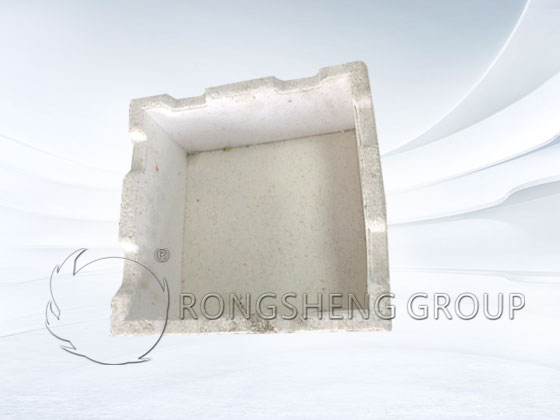
A saggar is a round kiln furniture made of refractory clay. During the firing of ceramics, to prevent damage and contamination of the body and glaze by gases and harmful substances, the ceramics and their bodies are placed in a container made of refractory material for firing. This container is called a saggar, also known as a box. Saggars are round bowls of various sizes made of refractory clay, fired at high temperatures. The shape of the saggar varies depending on the shape of the object. The saggar is one of the important kiln furniture pieces for firing porcelain. After preparation, the iron ring on the inside of the saggar is removed, the saggar is shrunk and removed from the inside, and then the inner wall is smoothed and shaped. When the saggar walls and bottom are moderately dry, the saggar wall edges are dipped in slurry, and it is placed on the saggar bottom. The joints are then smoothed.
Saggars are commonly used to protect or support products during firing, such as in the firing of tableware or biscuits, or in powder firing. These products can be made through semi-dry pressing, plastic die casting, and casting.
Saggers are generally made of various materials, including high-alumina, aluminosilicate, magnesia, and silicon carbide.
1) High-alumina saggers are mainly composed of high-alumina raw materials and refractory clay. They are divided into high-alumina-cordierite saggers and mullite-cordierite saggers. They have high refractoriness and a low softening point under high-temperature load, as well as general thermal stability. The key requirement is sintering.
2) Aluminosilicate saggers are mainly composed of clay clinker and refractory clay. They have poor compressive strength and thermal stability, a lower operating temperature (generally below 1300℃), and a short service life.
3) Silicon carbide saggers are made by firing silicon carbide raw materials and a certain binder at high temperatures. These saggers have high refractoriness and a high softening point under high-temperature load, good thermal conductivity, high thermal stability, and a long service life. However, the raw materials are expensive, and they are mostly easily oxidized in oxidizing atmospheres.
4) Magnesia-based saggers are mainly made by introducing magnesium oxide (MgO) into the feed of silica-alumina saggers, causing the sagger to generate a certain amount of cordierite crystals at high temperatures. This results in good thermal stability, but the high-temperature load softening point and the softening temperature under a certain load are both relatively low.
Features of Saggers
Thermal Stability: Special treatment ensures product reliability under conditions of rapid heating and cooling.
Corrosion Resistance: The uniform and dense material structure slows down the rate of corrosion during use.
Impact Resistance: High thermal shock resistance allows for reliable processing.
Acid Resistance: The addition of special materials significantly improves the physical properties of the material, exhibiting excellent acid resistance and greatly extending the service life of graphite.
High Thermal Conductivity: High fixed carbon content ensures good thermal conductivity, shortens dissolution time, and significantly reduces energy consumption.
Pollution Control: Strict control of material composition greatly reduces material pollution.
Quality Stability: The uniform isostatic pressing process and quality control system further guarantee the stability of the material.
Silicon Carbide Saggers
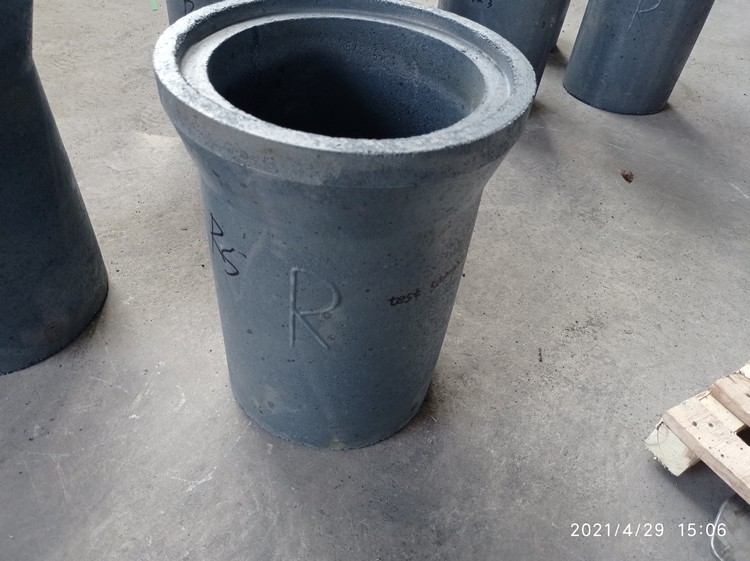
Silicon carbide saggers are important refractory materials with excellent high-temperature resistance, wear resistance, and corrosion resistance. They are widely used in ceramics, metallurgy, electronics, and chemical industries.
The material composition of silicon carbide saggers is primarily based on silicon carbide (SiC). Silicon carbide is an inorganic compound, belonging to non-oxide ceramic materials, and possesses extremely high hardness, wear resistance, corrosion resistance, and excellent thermal conductivity. In the manufacturing process of silicon carbide saggers, silicon carbide powder is typically used as the main raw material, with the addition of auxiliary materials such as binders, plasticizers, and reinforcing phases to improve the material’s formability, sintering performance, or enhance its mechanical strength.
Main Properties of Silicon Carbide Saggers
Silicon carbide saggers, due to their unique material composition, exhibit a series of excellent properties, making them an indispensable material in high-temperature industrial applications.
High-Temperature Stability: Silicon carbide has an extremely high melting point (approximately 2700°C), which allows silicon carbide saggers to remain stable at extremely high temperatures, resisting deformation or melting. Therefore, it is ideally suited for processes requiring high-temperature treatment, such as ceramic sintering and metal smelting.
Excellent Thermal Conductivity: Silicon carbide is a good thermal conductor, enabling silicon carbide saggers to transfer heat quickly and evenly, thereby improving heating efficiency and reducing energy consumption. Simultaneously, it can effectively control the temperature gradient during product heat treatment, avoiding thermal stress or cracking caused by uneven temperature.
Good Wear Resistance: The high hardness and good wear resistance of silicon carbide material allow silicon carbide saggers to resist mechanical actions such as particle erosion and wear during use, extending their service life.
Strong Corrosion Resistance: Silicon carbide exhibits excellent resistance to various corrosive media such as acids and alkalis. Therefore, silicon carbide saggers remain stable when handling corrosive substances and will not be damaged by corrosion.
Good thermal shock resistance: Silicon carbide saggers maintain good stability even when subjected to rapid temperature changes (i.e., thermal shock), and are not prone to cracking or breakage. This property is particularly important for processes requiring frequent heating and cooling cycles.
Lightweight and high strength: Although silicon carbide material itself has a high density, silicon carbide saggers treated with special processes typically possess high strength and light weight, facilitating handling and operation.
Good chemical stability: Silicon carbide does not readily react chemically with most substances at high temperatures. Therefore, silicon carbide saggers maintain their chemical stability during use, without affecting product quality.
Molding Methods of Silicon Carbide Saggers
Pressure molding is one of the commonly used molding methods in the manufacture of silicon carbide saggers. This process typically involves the following steps:
Raw material mixing: Silicon carbide powder, binder, plasticizer, and other raw materials are mixed evenly in a certain proportion to form a plastic slurry.
Compression molding: The mixed clay is placed into a molding die, and pressure is applied using a hydraulic press or other pressing equipment to shape the clay into the desired sagger shape. During the compression process, parameters such as pressure and temperature need to be controlled to ensure the density and strength of the sagger.
Compression molding offers advantages such as high production efficiency and precise sagger shape and dimensions, making it suitable for mass production.