Focus on Producing Quality Unshaped Refractory and Fire Bricks !
Damage to High-Alumina Bricks at the Top of the Electric Furnace
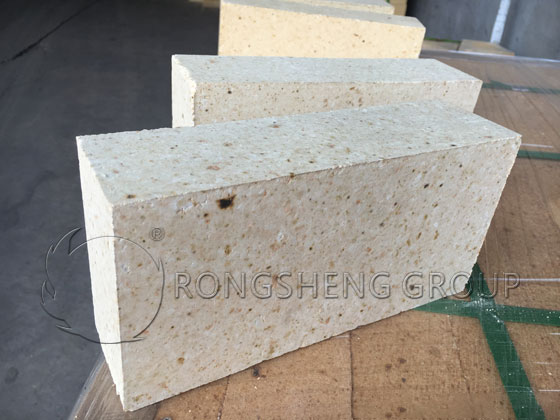
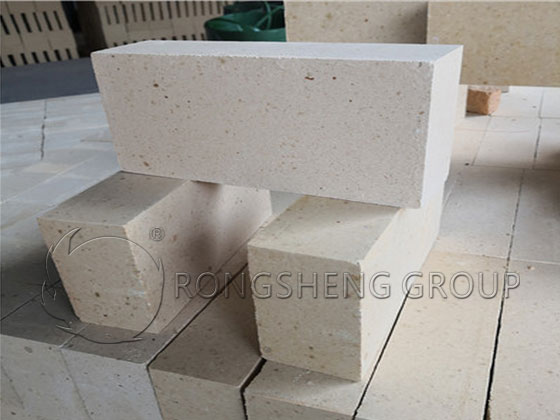
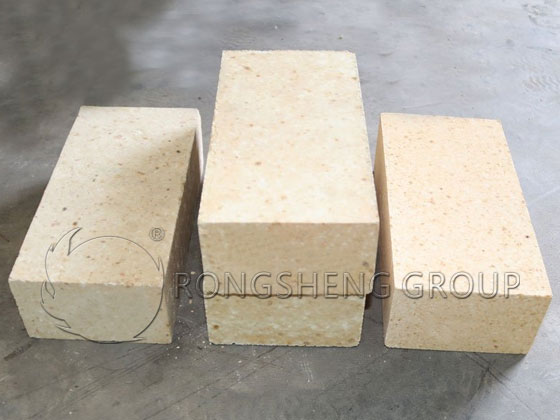
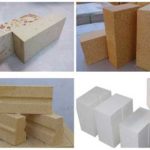
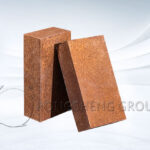
High-alumina refractory bricks for electric arc furnace roofs refer to refractory products manufactured from a mixture of calcined bauxite and a small amount of clay, containing an Al₂O₃ content of over 65%, and specifically designed for use in electric furnace roofs. In the early days of smelting certain special steels—regardless of whether the electric furnaces were of the basic or acidic type—silica bricks were predominantly used for the furnace roofs. Silica bricks possess a high load-softening temperature and low specific gravity, enabling them to support the furnace roof under smelting temperatures without collapsing, thereby ensuring long-term service life. In the UK, sillimanite bricks were also utilized for furnace roofs in small-scale electric furnaces during the early period. These bricks offered certain advantages not found in silica bricks—such as uniform thermal expansion, a low coefficient of linear expansion, and the elimination of the need for expansion joints. However, due to their cost being three to four times that of silica bricks, their widespread adoption was limited.
High-Alumina Refractory Bricks for Electric Arc Furnace Roofs
High-alumina bricks for electric furnace roofs. With advancements in electric furnace smelting technology—including oxygen-assisted melting and refining—smelting temperatures have steadily risen, and furnace capacities have continuously expanded. Under these conditions, traditional silica brick roofs began to exhibit dripping (melting), with molten material flowing down onto the furnace walls, thereby compromising the service life of the walls and altering the slag composition. Furthermore, when lime additions were required to adjust the slag composition, the resulting lime dust exacerbated the corrosion of the silica bricks. Beginning in the 1960s, the United States conducted trials on the roofs of electric furnaces used for special steel production, testing various refractory materials such as fired magnesia-chrome bricks, chrome-magnesia bricks, special magnesia bricks, and dolomite bricks. These trials involved furnaces ranging in size from large units (100–160 tons) to small ones (5–8 tons). In the smaller furnaces, spalling (flaking) of the refractory lining occurred frequently; while the technique of inserting steel plates into the brick joints could mitigate this spalling, it unfortunately led to electrical leakage and localized overheating. When used in larger furnaces, the sheer weight of these refractory linings caused structural deformation, necessitating the installation of additional mechanical support frameworks. Although alkaline bricks generally possess superior slag resistance compared to high-alumina bricks, the trials failed to yield ideal results; indeed, the service life of these alternative linings often proved no longer than that of high-alumina roof bricks, while their associated costs were significantly higher.
Due to a scarcity of bauxite resources, the former Soviet Union was compelled to focus on developing alkaline brick linings for its electric furnace roofs. By 1970, although electric furnace steel accounted for only 9.2% of the Soviet Union’s total steel production, alkaline brick linings were utilized in 95% of its electric arc furnaces.
In China, the use of high-alumina bricks for electric furnace roofs began in 1953, capitalizing on the country’s abundant natural bauxite resources. The simple manufacturing processes and low production costs associated with these bricks served as favorable conditions for their widespread adoption, ultimately leading to their replacement of traditional silica bricks.
Performance Characteristics of High-Alumina Bricks for Electric Furnace Roofs
The technical performance characteristics of high-alumina bricks for electric furnace roofs vary depending on their Al₂O₃ content. In China, these bricks are categorized into three distinct grades: DL-80, DL-75, and DL-65; standardized designs and specifications have been established for both the brick shapes and their masonry construction.
The primary crystalline phases within these high-alumina roof bricks consist of mullite and corundum. The premium grade—DL-80—is predominantly composed of the corundum phase, endowing it with exceptional refractoriness (high-temperature resistance) and superior resistance to various types of molten slag. The approximate thermal expansion rate of high-alumina bricks used in furnace roofs increases as the temperature rises; notably, for high-grade bricks, this rate can reach 0.8%–0.9% at 1200°C.
Due to variations in the crystal structure of their primary crystalline phases—as well as differences in the quantity and viscosity of their glassy phases—high-alumina bricks for electric furnace roofs exhibit varying elastic moduli; consequently, the strain generated under high-temperature stress differs among them. For instance, high-alumina bricks manufactured from bauxite with an Al₂O₃ content of 85%–86% demonstrate an elastic modulus that fluctuates with temperature. Peak elastic modulus values (6.69 MPa and 8.97 MPa) are observed when the temperature reaches 1230°C during heating and when it cools to 850°C; furthermore, the elastic modulus values recorded during the cooling phase are higher than those observed during the heating phase.
Key Process Points for High-Alumina Bricks for Electric Furnace Roofs
Select high-grade, high-purity, and well-sintered bauxite raw materials. The proportion of bonding clay—which should possess good plasticity and low impurity levels (specifically K2O, Na2O, and Fe2O3)—should be kept to a minimum. The clay is added in the form of a slurry, and the maximum critical grain size of the grog (calcined material) is set at 4–3 mm. Forming is performed using a high-tonnage press to prevent particle segregation within the mold. The dimensions of the bricks must be manufactured in strict accordance with the engineering drawings, avoiding any distortion or cracking.
Application of High-Alumina Bricks for Electric Furnace Roofs
When constructing the furnace roof, it is essential to ensure uniform load distribution and to leave appropriate expansion joints in both the radial and circumferential directions. The bricks must undergo a pre-firing (drying/baking) process prior to use. During smelting operations, if damage primarily manifests as spalling, it is advisable to utilize lower-grade bricks; conversely, if damage is predominantly caused by molten erosion, higher-grade bricks are recommended. Furthermore, during continuous high-temperature smelting, soot-blowing operations should be performed on the furnace roof.
Factors Contributing to the Deterioration of High-Alumina Bricks in Electric Furnace Roofs
The deterioration of high-alumina bricks in electric furnace roofs is primarily caused by chemical corrosion and the spalling or flaking of the brick body.
The operating conditions for high-alumina bricks in electric furnace roofs are extremely harsh, with maximum working temperatures reaching 1650°C. In particular, during the reducing period, the roof bricks remain under prolonged high-temperature exposure. After tapping (molten steel discharge) and during furnace patching, the temperature drops to 1350°C; subsequently, when charging a top-loading furnace, the roof is exposed to the atmosphere and undergoes rapid cooling to below 800°C. In addition to the shock caused by high temperatures and rapid thermal fluctuations, the high-alumina roof bricks are also subjected—at elevated temperatures—to corrosive attack by oxides such as CaO and MgO (derived from slag-making and furnace-patching materials) and FeO (present in furnace dust). This results in the generation of various destructive stresses. The extent of the damage caused by these interactions depends on the physicochemical, high-temperature, and mechanical properties of the high-alumina bricks themselves, and is also closely correlated with the specific smelting operations and the quality of the brickwork installation in the furnace roof.
An examination of the residual bricks following deterioration reveals that they can be broadly classified into three distinct zones: a reaction zone, a transition zone, and an unaltered zone. Visually, the reaction zone appears as a combination of grayish-brown and dull yellow hues. The grayish-brown material exhibits a greasy luster and is exceptionally dense and hard. A layer of slag accretions covers the surface of the reaction zone, while the edges feature a thick, unevenly distributed layer containing a significant amount of iron-rich slag. These iron slag inclusions range in diameter from 1 to 10 mm—reaching a thickness of approximately 50 mm at the edges—and represent the solidified remnants of molten streams that flowed along the arched structure of the furnace roof under intense heat. The transition zone appears brownish-tan or yellowish-brown, and is likewise dense and hard. The unaltered zone, by contrast, presents a beige color, within which the original yellowish-white refractory clinker grains remain visible. In the high-temperature regions, the reaction zone typically extends to a depth of 15 mm, while the transition zone extends to 10 mm. Within the transition zone, processes involving the development of corundum and mullite crystals, as well as secondary mullitization, are actively taking place.
Based on an analysis of the residual bricks, the corrosion process affecting the high-alumina bricks used in electric furnace roofs is primarily driven by the CaO and MgO introduced via slag-making and furnace-patching materials—specifically lime, fluorspar, and metallurgical dolomite sand. Furthermore, the reaction zone contains a substantial quantity of iron oxides that actively participate in these chemical reactions. Under conditions of scorching heat, the refractory brick itself not only generates a liquid phase but also reacts with external fluxes; consequently, a multi-component melt forms on the brick’s surface. At the conclusion of each smelting cycle—during the 20 to 25-minute interval before the next batch of steel is smelted—the furnace roof undergoes rapid cooling to temperatures below 800°C. At this stage, distinct crystalline phases precipitate from the liquid phase (which varies in composition), while the remaining material solidifies into a glassy matrix upon cooling. When the furnace is subsequently reheated for the next smelting operation, the glassy matrix remelts, and the crystalline phases redissolve. During this process, a portion of the melt drips down into the steel slag, while another portion continuously infiltrates and reacts with the interior of the brick. This dynamic causes the brick’s unaltered core to gradually transform into a transition zone, which in turn evolves into a reaction zone; through this repetitive, progressive process, the refractory brick undergoes continuous erosion and depletion.
The degradation of high-alumina bricks in electric furnace roofs is not solely due to chemical action; during the smelting process, a phenomenon involving the spalling of the brick body in flakes is frequently observed. Post-service examination of the high-alumina bricks reveals that this flaking is caused by the formation of transverse cracks resulting from rapid shrinkage within the transition zone. The primary cause lies in the migration of impurities—originally present in the raw brick—and infiltrated fluxes toward the cooler face of the brick, where they accumulate within the transition zone. Under high-temperature conditions, this accumulation generates a substantial liquid phase; simultaneously, within this transition zone—influenced by both external impurities and high temperatures—the corundum undergoes recrystallization and grain growth. This effect is particularly pronounced when the initial crystallization and recrystallization processes of the corundum and mullite within the high-alumina brick are insufficient, leading to increased shrinkage at operational temperatures. Furthermore, various factors related to the specific smelting process itself also contribute to this degradation.
In summary, the deterioration of high-alumina bricks in electric furnace roofs is primarily driven by chemical corrosion and the spalling or flaking of the brick body. Regarding chemical corrosion, high-alumina bricks with an Al₂O₃ content of no less than 75% generally demonstrate superior performance. While the spalling and flaking of the brick body reduce the overall service life of the furnace roof, such spalling is, in turn, an inevitable consequence of chemical corrosion. Fluctuations in furnace temperature serve as the specific conditions that trigger the formation of cracks and subsequent spalling.
Based on this analysis of the degradation mechanisms affecting high-alumina bricks in electric furnace roofs, extending the service life of the roof necessitates an improvement in the quality of the bricks themselves. Manufacturers must strive to produce furnace roof bricks characterized by high purity, high density, and superior resistance to thermal spalling. Concurrently—and in line with current advancements in refractory technology for electric furnace roofs—it is also possible to utilize monolithic, precast refractory blocks. These blocks, typically formed from chrome-corundum castables, are pre-molded as single, integral units (eliminating the need for firing). This approach effectively bypasses the inherent weaknesses associated with traditional masonry construction using high-alumina bricks—specifically, the presence of mortar joints and the associated lack of uniform resistance to erosive stresses.