Focus on Producing Quality Unshaped Refractory and Fire Bricks !
Monolithic Lining Technology Using Cold-Rammed Paste for Submerged Arc Furnaces and Aluminum Electrolytic Cells
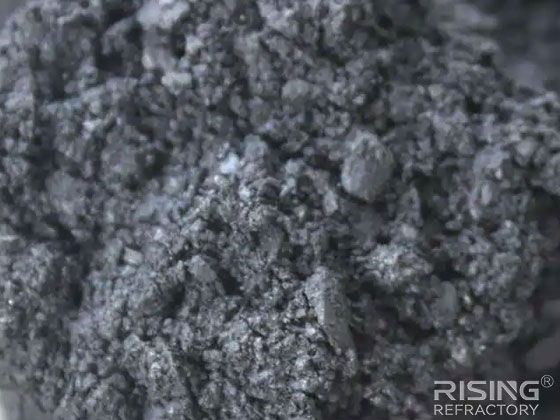
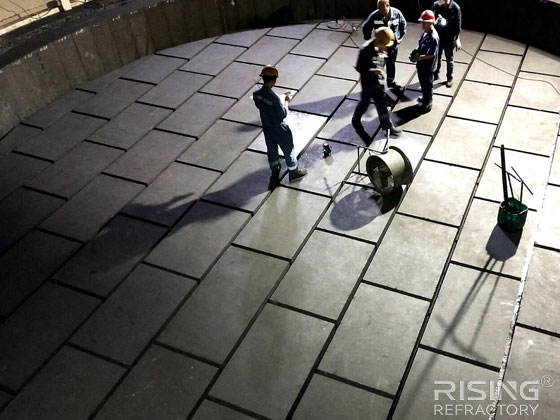
The monolithic furnace-lining process using cold-ramming paste differs from traditional lining methods in that it eliminates the need for carbon-brick masonry. Instead, a micro-expanding cold-ramming paste is applied through a cold-ramming technique to create a seamless, integrated furnace lining. A framework is set up within the furnace shell, and the cold-ramming paste is laid and rammed into place to form the bottom and walls of the furnace. Traditionally, cold-ramming paste is a carbon-carbon composite material—composed of electrically calcined anthracite, graphite, and a modified binder—primarily used to fill the gaps between carbon bricks in the linings of industrial furnaces, such as those for aluminum electrolysis, submerged-arc smelting, or calcium carbide production. It can be applied during construction without the need for preheating.
Monolithic Lining Technology for Aluminum Electrolytic Cells
During the construction of the lining for an aluminum electrolytic cell, the joints between components are typically bonded using a paste that is resistant to high temperatures and electrolyte corrosion. However, differences in the shrinkage rates of the materials used for the bottom, side walls, and joint-filling paste can lead to the formation of gaps during the sintering process. These gaps allow molten metal and electrolyte to penetrate and cause erosion, eventually damaging the cathode lining of the cell. Furthermore, the cathode side walls of an aluminum electrolytic cell must be dense and free of cracks or voids to prevent cracking during operation. They also require high electrical resistivity to minimize horizontal currents, thereby improving current efficiency and preventing energy waste. Additionally, the lining must maintain good contact with the cathode steel bars, possess sufficient hardness to withstand the washing, corrosion, and abrasion caused by the electrolyte and molten aluminum, exhibit a low coefficient of thermal expansion, and remain resistant to cracking at operating temperatures.
To address these challenges—and drawing inspiration from monolithic lining techniques using cold-ramming paste—a monolithic forming approach has been proposed for the construction of aluminum electrolytic cell cathodes. Given that the requirements for the bottom and the side walls differ, distinct paste formulations are used for each, which are then rammed into place within the cell shell. Compared to traditional construction methods using carbon blocks, monolithic lining with cold-ramming paste can reduce production costs, enhance efficiency, lower energy consumption, and deliver significant economic and environmental benefits.
In research exploring the application of monolithic lining technology, a specialized institute has developed a method where the pastes for the side walls and the bottom are applied in layers and rammed—using vibration-compaction—to form a single, integrated structure. Upon sintering, the side walls and bottom fuse into a continuous cathode lining characterized by uniform phase composition and structure. This monolithic lining minimizes the formation of cracks, eliminates the risk of “leaking” (metal or electrolyte breakthrough), and effectively extends the service life of the aluminum electrolytic cell.
Monolithic Lining Construction Process for Submerged Arc Furnaces Using Cold-Rammed Paste
When a furnace lining is constructed as a monolithic structure using cold-rammed paste, it must undergo a rigorous drying and baking phase. Once production begins, the heat generated within the furnace itself is utilized over a period of approximately six months to bake and carbonize the lining. During this process, the cold-rammed layers undergo coking and graphitization, creating a “crucible effect”—a critical aspect of the monolithic cold-rammed lining construction process.
This monolithic construction method—which integrates optimized material selection, preparation techniques, and application processes—overcomes the limitations of traditional carbon-brick linings. It meets the technical requirements for smelting operations in submerged arc furnaces (such as those used for ferroalloys), while simultaneously reducing energy consumption and enhancing production efficiency. It plays a positive role in advancing the technical standards of electric furnace equipment. Linings formed as a monolithic structure using cold-rammed paste exhibit high density, which prevents molten metal and electrolytes from penetrating or eroding the lining; this significantly extends the service life of the lining and effectively resolves quality issues often associated with carbon-brick construction. Beyond its use in submerged arc furnaces and yellow phosphorus furnaces, this monolithic construction technique is also highly effective for aluminum electrolysis cells and various other types of smelting furnaces. Through the comprehensive application of specialized paste preparation and construction techniques, this method can be deployed even more broadly, yielding substantial economic, social, and environmental benefits.
The adoption of this monolithic cold-rammed lining technology addresses the shortcomings of traditional carbon-brick linings—where, in some cases, the carbon lining would be completely consumed by oxidation within just a few months, necessitating furnace shutdowns for major overhauls or complete reconstruction. By leveraging the excellent plasticity of cold-rammed paste, this approach achieves an optimal balance between material selection, technical innovation, and ease of construction. It not only transcends the limitations of conventional carbon-brick linings but also satisfies the rigorous technical demands of smelting processes for ferroalloys, yellow phosphorus, and other metallurgical applications. Consequently, it enables mining and metallurgical enterprises to reduce energy consumption and increase output, serving as a significant catalyst for the technological advancement of electric furnace installations.
Other Lining Construction Techniques for Submerged Arc Furnaces
Construction Using Pre-baked Carbon Bricks
Pre-baked carbon bricks are typically manufactured using anthracite, petroleum coke, or pitch coke—all calcined at 1,250°C—as aggregate, with coal tar pitch serving as the binder. These materials are mixed, kneaded in specific proportions, and extruded to form “green” (unbaked) carbon bricks. Before being put into service, these green bricks are fired in a furnace under a reducing atmosphere at a controlled heating rate (generally not exceeding 1,200°C). This firing process stabilizes their geometric shape, making them suitable for lining submerged arc furnaces, electric furnaces, and similar equipment.
In this construction method, the refractory lining is built using these pre-baked carbon bricks, with the 40–50 mm gaps between the blocks filled using electrode paste, hot-ramming paste, or cold-ramming paste. Because electrode paste has a high softening temperature and is sensitive to temperature fluctuations, it must be preheated to approximately 140°C before application. Furthermore, the release of toxic gases (such as those from the pitch) creates a harsh working environment, and it is not uncommon for the paste in the joints to be insufficiently compacted. Additionally, when the furnace is heated, only the paste within the joints undergoes baking—a process during which it adheres to the pre-baked carbon blocks. Due to the difference in shrinkage rates between the joint paste and the pre-baked carbon bricks, the joints become the weakest points in the lining and are the most susceptible to erosion by molten metal.
Once the furnace enters production, the pre-baked carbon bricks—having been calcined and fired at temperatures lower than their actual operating temperatures—undergo further residual volumetric shrinkage. As volatile components are expelled, the gaps between the bricks widen, allowing molten metal to gradually penetrate through these spaces.
Furnace Lining Construction Using Self-Baking Carbon Bricks
Self-baking carbon bricks have been used in small- and medium-sized submerged arc furnaces and calcium carbide furnaces since the 1970s. As the application technology matured, their use gradually extended to large-scale submerged arc furnaces. The raw materials for self-baking carbon bricks are largely the same as those for pre-baked carbon bricks; they utilize high-temperature calcined anthracite (calcined at approximately 1750°C) as an aggregate, mixed with binders—such as coal tar pitch—and various additives. This mixture is kneaded uniformly at a specific temperature and then extruded into shape. These bricks can be used to construct furnace bottoms and linings without prior baking. The gaps between the bricks are kept within 1 mm—significantly smaller than those found in linings constructed with pre-baked carbon bricks—and the spaces between the bricks themselves, as well as between the bricks and the furnace walls, are filled with a low-temperature jointing paste.
Unlike pre-baked carbon bricks, which are fired before installation, self-baking carbon bricks undergo an in-situ baking process. This occurs from the top down, layer by layer, driven by the heat generated during the furnace drying-out phase and subsequent operational production, all within a reducing atmosphere. Because the self-baking carbon bricks and the jointing paste share similar material compositions, they begin to bake simultaneously under the same conditions. Consequently, the plastic deformation of the carbon bricks during the baking process compensates for any gaps created during construction. As the temperature rises, the material undergoes gradual graphitization, forming a dense, highly integrated carbonaceous lining that eventually transitions into a graphitic structure.
In contrast, linings built with pre-baked carbon bricks often feature larger gaps; during the baking process, the jointing paste may shrink and develop cracks, potentially allowing molten metal to penetrate and cause a furnace breakout. By contrast, the use of self-baking carbon bricks—which allow for much tighter joints—results in a more cohesive, dense, and integrated graphitic lining. This structure effectively resists the penetration of molten metal and enhances overall erosion resistance, thereby significantly extending the service life of submerged arc furnaces. Furthermore, the graphitization of self-baking carbon bricks enhances their electrical conductivity, which increases the current in the main circuit, reduces detrimental shunt currents, improves electrical energy efficiency, and yields economic benefits.
While the use of self-baking carbon bricks can significantly extend the service life of a furnace and enhance economic efficiency, it is important to note that pre-baked carbon bricks undergo shrinkage during their initial firing process. If the entire baking process for self-baking carbon bricks takes place within the furnace itself, the resulting shrinkage is greater than that observed when using pre-baked bricks. If the quality of the self-baking carbon bricks is poor—leading to excessive residual shrinkage after baking—the furnace lining will develop cracks. During operation, molten metal can easily penetrate these cracks, potentially causing a furnace breakout. Moreover, self-baking carbon bricks are often limited in variety and of lower quality; in the “triangular zone” (the area between the electrodes), smelting products can readily infiltrate the pores of these bricks, making the lining susceptible to erosion. Additionally, the increased thermal conductivity of the lining following graphitization can cause the furnace bottom temperature to rise excessively, damaging the refractory bricks and further increasing the risk of a furnace breakout. Consequently, there is a need to develop a new furnace-lining construction method.